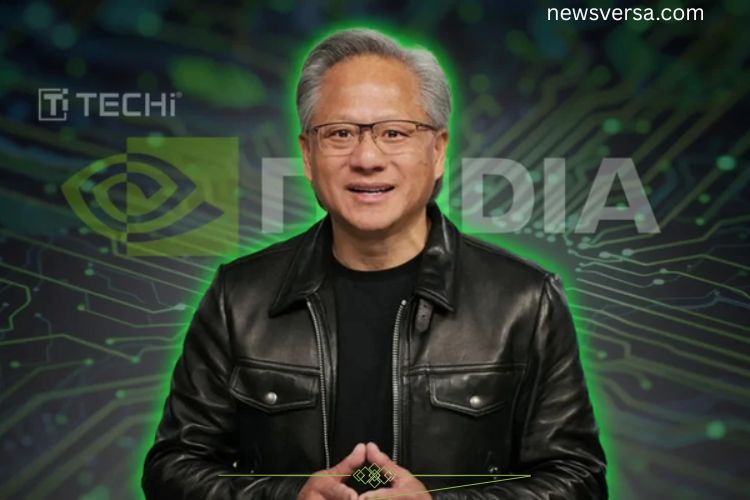
Nvidia may not be using AI to predict the stock market—yet—but CEO Jensen Huang is betting the technology can power the next era of growth. Despite his optimism, investors are cautious. Even the promise of a technological revolution can lose luster when sales forecasts confront harsh reality.
The company’s latest earnings call highlighted the tension between hype, hope, and hard numbers. Huang painted a trillion-dollar vision for AI, yet Wall Street reacted skeptically, dragging Nvidia shares lower despite the CEO’s confident outlook.
Read More: Nvidia Stock Outlook: Will the AI Powerhouse Soar to Unprecedented Heights in the Next Five Years?
A Trillion-Dollar AI Opportunity
On Wednesday, Huang addressed concerns about the slowdown in AI spending. He framed the current moment as the start of a massive opportunity, projecting $3 trillion to $4 trillion in AI infrastructure investment by the end of the decade.
Huang emphasized:
“A new industrial revolution has started. The AI race is on. We see $3 trillion to $4 trillion in AI infrastructure spending by the end of the decade.”
His comments aimed to reassure investors shaken by weaker-than-expected third-quarter sales forecasts and slowing growth indicators. The message was clear: the AI boom is far from over.
Stock Reaction: Optimism Meets Reality
Despite Huang’s bullishness, Nvidia shares fell nearly 2% to $178.43 in Thursday trading. The decline followed guidance that excluded potential revenue from China, reflecting lingering market concerns over global regulatory and trade uncertainties.
Nvidia’s agreement with the U.S. government, allowing exports in exchange for 15% of H20 AI chip sales, did little to calm investor nerves. While strong orders outside China—like a $650 million deal with a single customer—show robust demand, regulatory hurdles continue to cloud the company’s outlook.
China: The Key Risk Factor
China remains Nvidia’s biggest uncertainty. Huang suggested compromise might be necessary to restore growth there, even proposing that the U.S. government take a share of sales from its newly launched Blackwell chips if export restrictions ease.
Currently, scaled-down versions of Nvidia’s chips are sold in China, but full approvals remain uncertain. Navigating this regulatory landscape is critical as the company balances global expansion with geopolitical constraints.
Big Tech Drives AI Growth
Beyond China, demand from hyperscalers such as Microsoft, Amazon, and other major data center operators continues to fuel Nvidia’s growth. Huang estimates $600 billion in data center capital expenditure this year, with Nvidia poised to capture around $35 billion through large-scale projects.
High-end Blackwell chips are already reserved through 2026, while previous-generation Hopper processors remain in demand. Analysts argue this sustained investment underscores Nvidia’s long-term growth potential, even amid short-term volatility.
Matt Orton, head of advisory solutions at Raymond James Investment Management, said:
“The mega caps are propelling a lot of the capex that Nvidia benefits from. Nvidia is still growing, and this just highlights the durability of the AI trade. Hyperscalers can accelerate, and there’s no sign of a slowdown in Nvidia’s results.”
Balancing Hype and Reality
Nvidia’s stock has mirrored the AI boom, significantly outperforming the S&P 500’s 10% gain this year. However, market excitement may be nearing saturation. OpenAI CEO Sam Altman recently warned investors about overexuberance, suggesting expectations may outpace fundamentals.
Despite a second-quarter net income surpassing Apple’s third-quarter profit, the gap between lofty expectations and short-term obstacles reminds investors that AI growth, while enormous, is not immune to challenges.
Long-Term Vision Remains Strong
Huang’s message is clear: the AI boom is just beginning, and Nvidia sits at its center. Even with short-term sales setbacks, global demand from hyperscalers and enterprises underpins the company’s trillion-dollar vision.
Thomas Martin, portfolio manager at Globalt Investments, remarked:
“We’re in the early stages of the AI boom. Massive capex announcements from hyperscalers show that growth is just getting started.”
Yet geopolitical tensions, particularly in China, pose ongoing risks. Nvidia’s success will require both technological leadership and regulatory navigation.
Nvidia’s Strategic Challenge
Huang’s optimism remains strong as Nvidia powers technologies from ChatGPT to next-generation data centers. However, short-term market pressures and regulatory complexities create a delicate balancing act. The company must satisfy immediate investor expectations while persuading regulators in both Washington and Beijing of its responsible AI strategy.
Even if Huang’s $3 trillion prediction comes to fruition, history shows that revolutions often take longer to fully realize than anticipated. Currently, Nvidia’s narrative blends extraordinary demand with persistent headwinds—an equation that will continue to influence investor sentiment quarter after quarter.
Frequently Asked Questions:
Who is Jensen Huang?
Jensen Huang is the co-founder and CEO of Nvidia, a global leader in graphics processing units (GPUs) and AI technologies. He is known for his visionary leadership in AI and computing.
What is Nvidia’s role in the AI revolution?
Nvidia provides high-performance GPUs and AI infrastructure critical for machine learning, data centers, autonomous vehicles, and AI applications. Their technology underpins platforms like ChatGPT and advanced AI models.
What does Huang mean by a “trillion-dollar AI revolution”?
Huang predicts that AI infrastructure spending will reach $3–$4 trillion by the end of the decade, driven by enterprise, hyperscaler, and global AI adoption. This represents a massive economic and technological shift.
Why are investors skeptical despite Huang’s optimism?
Investors remain cautious due to short-term revenue forecasts, regulatory uncertainty (especially in China), and geopolitical risks, even as long-term AI growth potential remains strong.
How does Nvidia plan to grow globally amid China-US tensions?
Nvidia is exploring compromises with regulators, offering scaled-down chips for China, and negotiating export agreements with the U.S. government to maintain access while complying with trade restrictions.
Which companies are driving Nvidia’s AI growth?
Hyperscalers like Microsoft, Amazon, and other massive data center operators are major customers. Their ongoing investment in AI infrastructure fuels Nvidia’s revenue growth and long-term expansion.
What challenges does Nvidia face in achieving Huang’s vision?
Key challenges include geopolitical risks, regulatory hurdles, supply chain constraints, and market valuation pressures. Balancing rapid growth with investor expectations is critical.
Conclusion
Nvidia, under the fearless leadership of Jensen Huang, remains at the forefront of a rapidly expanding AI revolution. Despite short-term market volatility and geopolitical uncertainties, the company’s technology and strategic vision position it for long-term growth. Huang’s trillion-dollar AI forecast highlights the transformative potential of AI infrastructure, fueled by hyperscalers, enterprises, and global adoption. Investors and industry watchers should recognize that while challenges like regulatory hurdles and China-US tensions exist, Nvidia’s innovation, market dominance, and relentless pursuit of AI breakthroughs make it a central player in shaping the future of technology. The AI boom is far from over—it’s evolving, and Nvidia is leading the charge.