
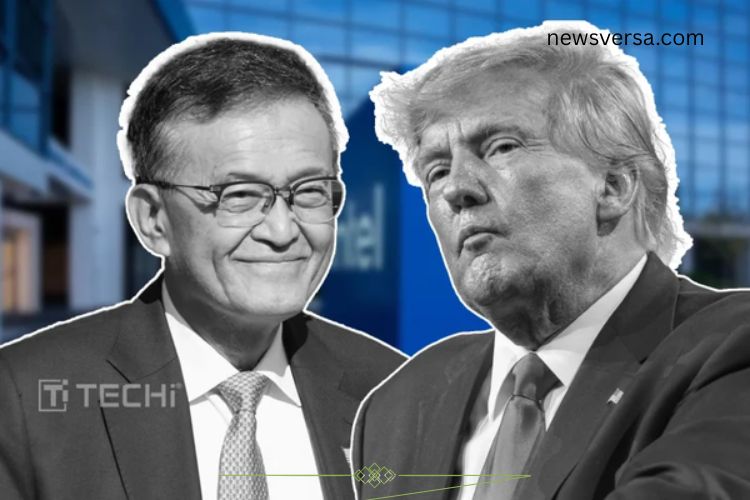
The prospect of the U.S. government acquiring a direct ownership stake in Intel marks a bold moment in American tech history. Semiconductors have become critical not just for consumer electronics but for national security, economic competitiveness, and innovation. A government stake signals that Washington recognizes chips as a strategic asset, worthy of investment at the highest level.
Yet, while the idea demonstrates ambition, it also carries significant risk. By involving itself directly in Intel, the government could intertwine the company with politics, where social media posts, cabinet discussions, and political messaging could sway market perception as much as earnings reports. For investors, Intel’s recent 7% surge reflects excitement that policymakers may finally back their words with action.
Strategic Boost for Intel
Government investment could accelerate Intel’s long-term turnaround. With additional capital and guaranteed demand from domestic initiatives, Intel could expand production capacity and compete more aggressively with global giants like TSMC. This shift could reduce U.S. reliance on foreign chip manufacturing—a priority in an era of global supply chain vulnerabilities and geopolitical uncertainty.
A stronger domestic semiconductor base offers more than economic benefits. It strengthens national security, ensures stable supply chains, and supports innovation in AI, autonomous vehicles, and defense applications. For policymakers, investing directly in Intel could be seen as both a defensive and proactive measure to safeguard America’s technological future.
Political Challenges and Market Risks
However, government ownership is not without complications. Intel could become entangled in political agendas, turning corporate strategy into a pawn of election-year maneuvering. Public figures have already scrutinized Intel’s leadership, with aggressive statements targeting CEO Lip-Bu Tan. If Washington becomes a shareholder, political pressure could intensify, transforming Intel’s boardroom into a stage for partisan influence.
For shareholders, the allure of government involvement is tangible in the short term, but the long-term implications remain uncertain. Stock volatility could increase as political narratives shift, and business decisions may be influenced by policy priorities rather than market efficiency. This raises questions about whether the infusion of capital will actually translate into competitive advantage—or simply make Intel a politically-backed entity.
Investor Caution and Market Realities
Despite the market excitement, investors must be cautious. Government ownership alone cannot fix Intel’s existing challenges, such as delayed product launches, weaker GPU and AI chip performance compared to rivals, and a history of trailing technological innovation. Analysts caution that political news can trigger short-term stock spikes but rarely alters underlying fundamentals.
Intel’s stock jump demonstrates Wall Street’s optimism about federal backing, yet chips are produced through innovation, engineering, and manufacturing excellence—not press releases or political guarantees. Without tangible improvements in product design, manufacturing efficiency, and research breakthroughs, government support may provide financial relief but fail to restore competitive dominance.
Implications for U.S. Tech Policy
If executed carefully, a government stake could reshape U.S. tech policy. Domestic chip production would gain momentum, creating a more resilient supply chain and reinforcing America’s position in critical technology sectors. Policymakers could leverage Intel’s enhanced capabilities to bolster innovation ecosystems, support startups, and reduce dependence on foreign suppliers for semiconductors.
The move could also set a precedent for future government involvement in strategic industries, signaling that Washington is willing to intervene in markets deemed vital to national interests. This could attract private sector confidence, spur domestic investment, and strengthen the overall U.S. technology landscape.
The Real Test: Innovation and Execution
Ultimately, Intel’s success will hinge less on Washington’s capital and more on the company’s ability to innovate. Producing competitive chips in AI, GPUs, and next-generation processors will determine whether the government stake translates into real technological gains.
Without sustained innovation, Intel risks becoming a supported company rather than a restored leader. Financial backing can only amplify performance if combined with strong execution, research excellence, and a strategic roadmap capable of outpacing international competitors. Investors should watch product pipelines, manufacturing milestones, and R&D progress closely, as these factors will decide Intel’s long-term trajectory.
Balancing Opportunity with Risk
The government’s potential investment in Intel embodies both opportunity and caution. On one hand, it could accelerate domestic chip production, strengthen national security, and signal America’s commitment to technological leadership. On the other, it exposes Intel to political volatility and market uncertainty.
Investors, executives, and policymakers must recognize that short-term enthusiasm from stock gains may mask underlying challenges. True success will require more than capital; it demands technological excellence, efficient execution, and strategic foresight. If Intel can meet these demands, government involvement could catalyze a resurgence that secures both shareholder value and national interests.
Frequently Asked Questions:
Why did Intel’s stock surge recently?
Intel’s stock jumped after reports suggested that the U.S. government may take a direct ownership stake in the company. Investors reacted positively to the potential for federal support, seeing it as a boost to Intel’s growth, competitiveness, and domestic chip production.
What does a U.S. government stake in Intel mean?
A government stake would involve the U.S. investing capital directly into Intel, giving Washington partial ownership. This could ensure steady demand, support expansion, and reduce reliance on foreign semiconductor manufacturers.
How could this affect Intel’s competitiveness?
Government backing could accelerate Intel’s turnaround, enabling faster production, increased R&D investment, and stronger competition against global leaders like TSMC. However, the stake won’t automatically resolve Intel’s existing product or technological challenges.
Are there risks associated with government ownership?
Yes. Intel could face increased political influence, stock volatility, and strategic decisions driven by policy rather than market needs. Short-term gains might mask long-term challenges if innovation and execution lag behind competitors.
How are investors responding to the news?
The stock market responded positively, with Intel’s shares jumping around 7%. Investors see potential government support as a sign of confidence in Intel’s future, though caution is advised due to underlying competitive risks.
Will government involvement guarantee Intel’s success?
Not necessarily. Financial support can help, but Intel’s success depends on its ability to innovate, manufacture competitive chips, and maintain technological leadership. Government backing cannot replace execution and product development.
How could this impact U.S. tech policy?
A government stake could strengthen domestic semiconductor production, reduce foreign dependence, and reinforce national security. It may also signal increased federal involvement in strategic industries in the future.
Conclusion
Intel’s stock surge amid talks of a potential U.S. government stake highlights both opportunity and uncertainty. While federal backing could accelerate domestic chip production, strengthen national security, and provide a financial boost, long-term success depends on Intel’s ability to innovate and compete globally. Government involvement may support growth, but true leadership in semiconductors will be determined by product excellence, technological advancement, and execution. Investors and policymakers alike must balance optimism with careful scrutiny, as the real test lies in Intel’s capacity to turn support into sustainable market dominance.