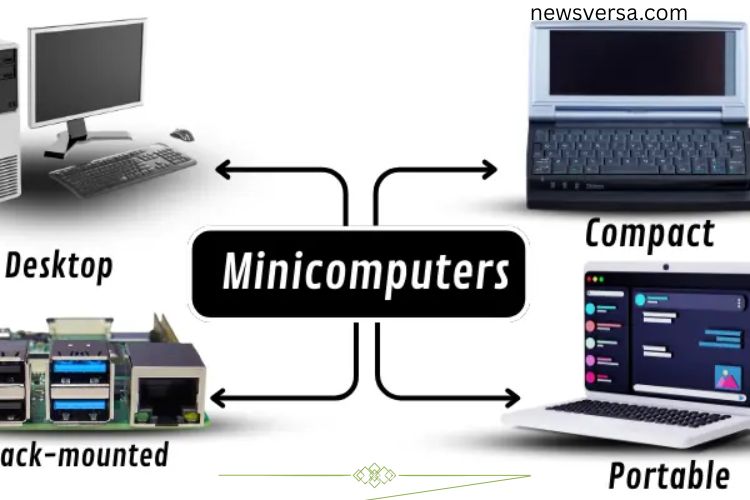
A minicomputer is a fascinating type of computer that sits between a mainframe and a personal computer in terms of size and power. Smaller than massive mainframes yet more powerful than standard personal computers, minicomputers have played a crucial role in bridging the gap between large-scale enterprise computing and individual use. They can handle multiple tasks simultaneously and support several users at once, making them an excellent choice for businesses, research labs, and educational institutions. Affordable, compact, and efficient, minicomputers have earned their place in the evolution of computing technology.
Read More: Unlocking the Power of Hybrid Computers: Explore Their Definition, Types, and Game-Changing Uses
History of Minicomputers
Minicomputers first emerged in the early 1960s, driven by a demand for smaller and more cost-effective computing solutions. Before this period, computers were enormous, expensive, and accessible only to large organizations or government institutions. The arrival of minicomputers transformed the computing landscape.
In 1965, Digital Equipment Corporation (DEC) introduced the PDP-8, one of the first commercially successful minicomputers. Unlike mainframes, which dominated the market at the time, the PDP-8 was compact, affordable, and powerful enough to handle essential tasks. Its success encouraged other companies to develop minicomputers, gradually making computing technology more accessible to smaller organizations, universities, and laboratories.
Minicomputers reshaped how people interacted with technology, enabling offices and schools to adopt computers for everyday tasks. They paved the way for more widespread computer literacy and innovation, ultimately influencing the development of modern personal computers.
Key Features of Minicomputers
Minicomputers offer a unique combination of features that make them highly effective for medium-scale computing tasks:
- Multi-user support: Minicomputers can handle many users at the same time, making them ideal for shared work environments.
- High processing speed: Faster than most early personal computers, they can manage complex operations efficiently.
- Large storage capacity: They provide ample space to store significant amounts of data.
- Server functionality: Minicomputers often serve as servers in networks, managing communication and resources.
- Multitasking capability: They can perform multiple tasks simultaneously without slowing down.
- Cost-effectiveness: Compared to mainframes, minicomputers are significantly more affordable.
- Versatility: Suitable for small businesses, laboratories, educational institutions, and more.
Types of Minicomputers
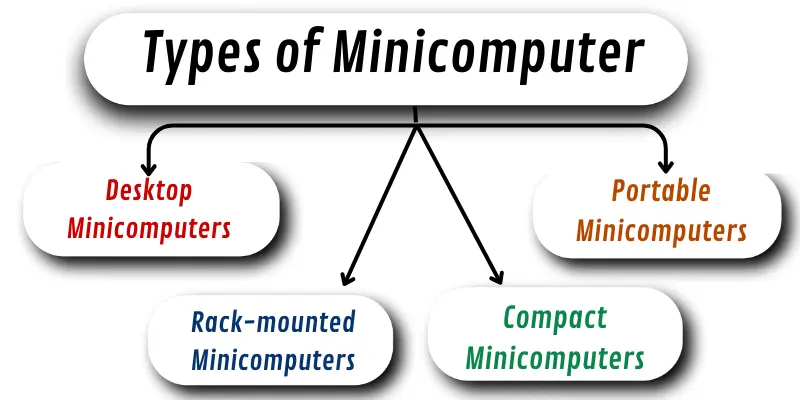
Minicomputers are designed for various purposes, depending on size, portability, and intended use. Some common types include:
Desktop Minicomputers:
Compact computers used in offices and small businesses that handle multiple tasks beyond what personal computers can manage.
Portable Minicomputers:
Small, lightweight computers that are easy to transport, often used for research, fieldwork, or specialized business tasks.
Rack-mounted Minicomputers:
These are installed in racks in data centers and are capable of managing large volumes of information efficiently.
Compact Minicomputers:
Tiny yet powerful systems used in laboratories, factories, or production environments to control machinery or manage data.
Popular Examples of Minicomputers
Several minicomputers gained fame for their performance, reliability, and versatility:
- PDP-11: Developed by DEC, it was widely used in education, industrial tasks, and research laboratories.
- VAX-11/780: Known for handling complex business and academic tasks efficiently.
- IBM System/3: Popular among small businesses for data processing and management.
- HP 3000: Frequently used for business operations and database management.
- Data General Nova: Affordable and commonly used in schools and research labs.
- Honeywell 200: Utilized in early commercial and educational computing systems.
- Tandem NonStop: Designed for continuous, reliable processing in banks, airlines, and telecommunications.
Characteristics of Minicomputers
Minicomputers are defined by their unique characteristics that make them reliable and practical:
- Medium-sized: Smaller than mainframes but larger than personal computers.
- Reliable performance: Able to perform tasks efficiently without frequent breakdowns.
- Powerful: Capable of executing complex operations and multitasking.
- Flexible: Can adapt to various types of work across industries.
- Energy-efficient: Consume less electricity compared to large-scale computers.
Parts of a Minicomputer
A minicomputer consists of several key components that work together to process and manage data effectively:
CPU (Central Processing Unit): The brain of the computer, responsible for processing instructions and calculations.
- Memory: Stores data for quick access and smooth operation.
- Input Devices: Devices like keyboards and mice allow users to provide commands.
- Output Devices: Monitors, printers, and other tools display or produce results.
- Storage: Hard drives or SSDs retain large amounts of data.
- Power Supply: Provides stable energy to all components.
- Motherboard: Connects and integrates all parts of the computer.
- Bus: Transfers data between various components.
- Cooling System: Prevents overheating during intensive operations.
- Peripheral Devices: Extra devices such as printers, scanners, or external drives.
Uses of Minicomputers
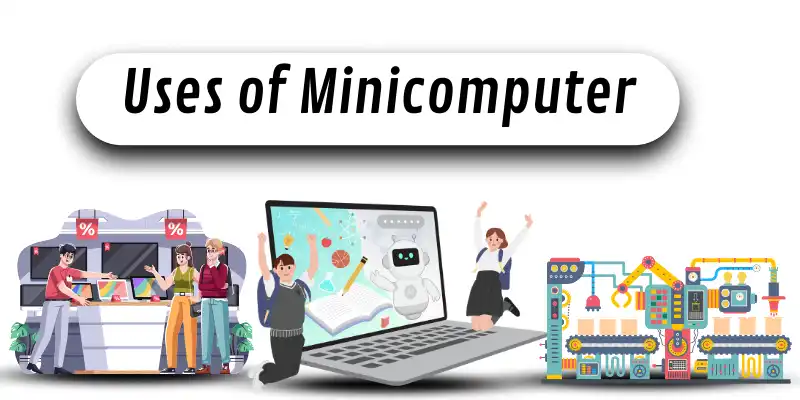
Minicomputers are highly versatile and serve a wide range of industries and purposes:
- Business: Managing payroll, accounting, and inventory tasks.
- Industry: Controlling machinery, production lines, and factory operations.
- Data Processing: Handling large datasets and complex calculations efficiently.
- Medical: Managing patient records, operating medical equipment, and research.
- Education: Supporting research, laboratory experiments, and administrative work.
- Retail: Managing sales, stock, and customer data.
- Communication: Operating telecommunications systems and data networks.
- Scientific Research: Assisting in simulations, data collection, and analysis.
In daily life, minicomputers play a subtle yet vital role in powering applications behind the scenes—from bank transactions to industrial automation.
Advantages of Minicomputers
Minicomputers offer several benefits that make them an attractive choice for medium-scale computing:
- Cost-effective: Cheaper than mainframes but capable of multitasking efficiently.
- Compact size: Requires less space, making them suitable for offices and labs.
- Reliable performance: Capable of running multiple applications without crashing.
- Energy-efficient: Consumes less power than larger computers.
- Flexible and adaptable: Can be used in various industries for different purposes.
Disadvantages of Minicomputers
Despite their strengths, minicomputers also have limitations:
- Slower than mainframes: Cannot match the speed of high-end computers for very large tasks.
- Limited scalability: Not ideal for very large businesses or organizations with massive data needs.
- Upgrade constraints: May have fewer options for hardware expansion.
- Maintenance requirements: Need proper cooling and regular maintenance to function optimally.
- Storage limitations: Cannot store as much data as mainframes or modern enterprise servers.
Frequently Asked Questions:
What is a minicomputer?
A minicomputer is a mid-sized computer that is smaller than a mainframe but more powerful than a personal computer. It can handle multiple tasks simultaneously and support several users at once, making it ideal for small businesses, research labs, and educational institutions.
When were minicomputers first introduced?
Minicomputers emerged in the early 1960s. One of the first popular models was the PDP-8, introduced by Digital Equipment Corporation (DEC) in 1965.
Are minicomputers still used today?
Yes, although traditional minicomputers have largely been replaced by modern servers, mid-range computers, and cloud-based solutions, their principles are still applied in industrial controllers, enterprise servers, and specialized computing environments.
What makes minicomputers unique?
Minicomputers strike a perfect balance between power and size, offering multi-user support, multitasking capabilities, and affordability. They paved the way for accessible computing beyond massive mainframes and helped small businesses, schools, and labs adopt technology efficiently.
How does a minicomputer handle multiple users?
Minicomputers are designed with multi-user operating systems, which allocate resources like CPU time, memory, and storage to different users simultaneously. This allows several people to run programs or access data at the same time without slowing down the system.
What kind of software runs on minicomputers?
Minicomputers can run operating systems like UNIX, VMS, or proprietary multi-user OS. They are capable of executing business applications, scientific simulations, industrial control programs, and database management systems.
Can minicomputers connect to networks?
Yes! Minicomputers often function as servers, connecting multiple client computers in a network. They manage data, control access, and facilitate communication between connected devices.
Conclusion
Minicomputers represent a remarkable chapter in the evolution of computing—powerful, compact, and versatile machines that bridged the gap between massive mainframes and personal computers. By supporting multiple users, enabling multitasking, and offering reliable performance at an affordable cost, they transformed the way businesses, research labs, and educational institutions approached computing. Although technology has advanced, and traditional minicomputers have largely been replaced by modern servers and cloud-based systems, their legacy continues.